The Hustle

Breaking the Monopoly: 10 Industries Ripe for Disruption

How entrepreneurs can find golden opportunities in consolidated markets.

Sign up for the free, 5-minute newsletter keeping 2M+ innovators in the loop with stories on business, tech, and the internet.
Featured Image_Breaking The Monopoly_Option 2 (1)

Why This Matters

The monopoly problem is bigger than you think.

While headlines focus on tech giants, a far more pervasive form of market consolidation has been quietly reshaping entire industries. Private equity firms and multinational corporations have methodically acquired competitors, suppliers, and distribution channels, creating stealth monopolies that operate behind a facade of choice.

The consequences are profound: skyrocketing prices, declining quality, frustrated customers, and suffocated innovation. Look at the fire truck industry, where consolidation has:

  • Doubled or tripled prices in just a decade

  • Created 2 - 4 year backlogs for essential public safety equipment

  • Let fire departments nationwide struggling with aging, broken fleets

But here's what makes this report essential reading from entrepreneurs: consolidated markets create their own vulnerabilities.

When an industry becomes dominated by a handful of players focused on extracting maximum profit from existing business models, they inevitably create gaps in the market—unserved customer segments, ignored pain points, and opportunities for technological disruption that incumbents are too slow or conflicted to pursue.

We've identified 10 industries experiencing similar consolidation patterns, each creating unique openings for entrepreneurs who know where to look.

Whether you're a founder seeking your next venture, an investor looking for untapped opportunities, or a business leader navigating competitive threats, this analysis provides the roadmap to find gold in monopolized markets. 

The patterns are clear. The weaknesses are exposed. The opportunities are waiting.

Eyeglasses

Hustle-Servant Leadership-72 copy
robot wearing glasses

The Illusion of Choice Behind Your Frames

When you walk into an eyewear store and see walls of seemingly different brands, there's something important to understand: most are owned by the same company.

EssilorLuxottica has built an impressive eyewear empire that controls nearly everything in your field of vision. They own major frame brands (Ray-Ban, Oakley, Persol), manufacture the lenses, operate the retail stores (LensCrafters, Sunglass Hut), and even control visiion insurance (EyeMed) that helps consumers pay for their products. This is vertical integration at its most comprehensive.

Market Size

Estimated at $151.37B globally (2025), growing at an annual rate of 3.36% through 2029. 

35 Years of Eyewear and Eyecare Acquisitions (Quartr) - The Hustle Industry Disruptions

Notable Consolidation Moves

Pain Points

Who's Hurt
Entry Opportunities
  • Ridiculously high markups on frames (often 1,000%+)

  • Zero price transparency (ever notice how frames rarely have price tags?)

  • The whole "your insurance covers this but not that" game

  • The time-consuming traditional purchase process

  • Despite dozens of "brands," most offerings look remarkably similar
  • Consumers paying inflated prices (often $300-$500 for glasses that cost under $30 to manufacture)

  • People with vision insurance who face confusing coverage limitations and high copays

  • Independent optometrists pressured to sell EssilorLuxottica products or lose access to popular brands

  • Small eyewear designers struggling to compete with the marketing muscle of major brands

  • Low-income individuals who delay vision care due to cost barriers

  • Build direct-to-consumer models with actual transparent pricing

  • Develop user-friendly tele-optometry platforms (navigating the regulatory maze)

  • Create better virtual try-on experiences using AR

  • Launch sustainability-focused or truly distinctive niche brands

  • Offer subscription models for people who like to change their look frequently

Disruption Spotlight: Vision for the Masses

Warby Parker changed the eyewear industry by cutting out the middleman and selling frames with prescription lenses starting at $95—much lower than traditional retail prices. Their home try-on program addresses the main consumer concern about buying glasses online, while their buy-one-give-one-model created a brand purpose that connects with consumers tired of EssilorLuxottica's hudden monopoly.

Hearing Aids

the hustle hearing aids

Breaking the Sound Barrier of Outrageous Prices

For decades, acquiring hearing aids has meant paying thousands of dollars after multiple appointments with specialists. This cost structure exists largely because a handful of global manufacturers (Sonova, Demant, WS Audiology) have controlled the market and sold exclusively through audiologists. The landscape is changing, however, as the DFA recently approved over-the-counter hearing aids, creating the most significant market disruption this industry has experienced in generations. 

Market Size

$6.1B globally (2022), growing rapidly at 6.8% annual

Notable Consolidation Moves

PAIN POINTS
WHO'S HURT
ENTRY OPPORTUNITIES
  • Eye-watering prices ($2,000 - $8,000+ for traditional devices)

  • Mandatory specialist visits for fitting and adjustment

  • The lingering social stigma of wearing "old people devices"

  • Limited user control over settings and features

  • Lack of technological innovation compared to consumer electronics
  • Seniors on fixed incomes who cannot afford traditional hearing aids

  • People with mild hearing loss who don't qualify for insurance coverage

  • Rural residents with limited access to audiologists for required fittings

  • Working adults who delay treatment due to cost and stigma concerns

  • Family members who bear the emotional burden of untreated hearing loss in loved ones
  • Develop affordable, high-quality OTC hearing aids

  • Create intuitive self-fitting apps with remote support options

  • Design stylish devices that look more like modern earbuds

  • Use AI for automatic environmental sound adjustment

  • Build platforms connecting users for peer support and tips
Disruption Spotlight: Hearing Help Without the Hassle

Eargo disrupted the hearing aid industry with nearly invisible, rechargeable devices that users can purchase directly online without audiologist visits. Their approach includes a smartphone app for adjustments with remote support from hearing professionals when needed - at about half the price of traditional prescription hearing aids from the major manufacturers. 


Veterinary Clinics

black dog with perked ears
the hustle veterinary clinic

When Corporate America comes for your vet

The traditional model of local veterinarians who know your pet by name and spend ample time with each client is rapidly transforming. Large corporations are systematically acquiring independent practices across the country. Companies like Mars Inc. (the same corporation known for their candy), JAB Holding Company, VetCor, and TSG Consumer Partners are acquiring clinics nationwide, typically maintaining the original practice name to preserve the appearance of local ownership. This consolidation trend is contributing to rising costs and fundamentally altering the nature of veterinary care.

Market Size

$39.8B in the US (2024) growing 4% annually

Notable Consolidation Moves

PAIN POINTS
WHO'S HURT
ENTRY OPPORTUNITIES
  • Skyrocketing costs for basic pet care

  • "Sorry, we're booked for weeks" appointment problems

  • Loss of that personal vet-client relationship that made care special

  • Corporate policies replacing veterinarian judgment

  • Staff burnout affecting quality of care
  • Pet owners facing unexpected price increases following clinic acquisitions

  • Veterinarians working under productivity quotas and corporate mandates

  • Low-income families forced to make difficult decisions about pet healthcare

  • Long-term clients who lose relationships with their trusted veterinarians

  • Veterinary staff experiencing burnout from increased workloads and reduced autonomy
  • Launch telemedicine platforms for initial pet consultations

  • Create mobile vet services that come to pet owners' homes

  • Develop tech tools that help remaining independent vets compete

  • Open specialized urgent care clinics for non-emergency but time-sensitive issues

  • Build community-focused models that reconnect vets with clients

Disruption Spotlight: The Emergency Vet in Your Pocket

VetTriage connects pet owners with licensed veterinarians via video chat 24/7, providing immediate guidance for health concerns without requiring emergency clinic visits. The service helps determine whether a pet needs immediate in-person care or can be monitored at home, potentially saving pets owners hundreds of dollars while reducing unnecessary visits to already busy emergency clinics. 


Medical Equipment

the hustle medical equipment

The Billion-Dollar Repair Monopoly You've Never Heard Of

Medical equipment inevitably maintenance and repair. What's less understood is the significant control that original equipment manufacturers (OEMs) like Medtronic, Siemens, and Abbott maintain over servicing their machines. These companies implemented substantial fees for service contracts while creating barriers that prevent hospitals and independent repair companies from accessing necessary parts, technically manual, and diagnostic software. This represents a critical "right to repair" issue unfolding in healthcare settings where equipment downtime can have serious consequences.

Market Size

$40.25B in the US (2023), growing at a CAGR of 6.91% through 2032. 

Notable Consolidation Moves

PAIN POINTS
WHO'S HURT
ENTRY OPPORTUNITIES
  • Service contracts that can cost 15-30% of the original equipment price annually

  • Artificially limited repair options increasing equipment downtime

  • Challenges servicing older but perfectly functional equipment

  • Restricted access to parts and documentation

  • Proprietary software locks blocking trained technicians
  • Patients experiencing delayed care due to equipment downtime

  • Rural and community hospitals unable to afford expensive service contracts

  • Biomedical technicians whose skills are devalued by manufacturer restrictions

  • Healthcare facilities forced to prematurely replace functional equipment

  • Taxpayers and insurance premium payers who ultimately fund these inflated costs
  • Build specialized independent service organizations (ISOs) for specific equipment types

  • Create platforms connecting hospitals with certified independent technicians

  • Develop parts sourcing for older equipment

  • Offer AI-driven predictive maintenance to prevent failures

  • Provide specialized training for biomedical technicians

Disruption Spotlight: Keeping Lifesaving Machines Running

Avante Health Solutions provides hospitals with an alternative to expensive manufacturer contracts for imaging equipment maintenance. Their network of ISO-certified engineers works on equipment from GE, Philips, and Siemens, performing component-level repairs at lower prices than OEM services while maintaining access to comprehensive parts inventory - helping healthcare facilities reduce costs without affecting patient care. 


Meat

the hustle meat industry_transparent bg

Breaking the Stranglehold of Big Meat

The meat industry represents perhaps the most consolidated sector on this list. Just four companies (Tyson, JBS S.A., Cargill, National Beef), control over 85% of beef processing in the United States. This level of concentration has contributed to concerns about pricing power, labor and animal welfare conditions, and environmental impact. Interestingly, this monopolistic structure is facing challenges from two directions: the rapidly growing alternative protein sector and direct-to-consumer specialty meat producers that emphasize quality, transparency, and ethical practices.

Market Size

$1.55T globally (2025), growing at 6.23% CAGR through 2030

Notable Consolidation Moves

PAIN POINTS
WHO'S HURT
ENTRY OPPORTUNITIES
  • Low prices paid to farmers despite high consumer prices

  • Environmental and animal welfare concerns

  • Supply chain fragility (remember the pandemic-era shortages?)

  • Limited consumer transparency about sourcing

  • Challenging economics for small, ethical producers
  • Small family farmers operating on razor-thin margins

  • Rural communities dependent on agricultural employment

  • Consumers concerned about food safety and sourcing

  • Meatpacking workers facing dangerous working conditions and limited protections

  • Animals raised in concentrated animal feeding operations (CAFOs)
  • Develop improved plant-based products with better taste/texture

  • Create enabling technologies for cultured meat scaling

  • Built direct-to-consumer platforms for high-welfare conventional meat

  • Establish regional processing facilities for independent producers

  • Launch transparent supply chain tracking solutions

Disruption Spotlight: Beef Without the Cow

Impossible Foods has entered the meat market not by competing directly, but by creating plant-based alternatives that closely resemble conventional meat. Their innovation - leghemoglobin, an iron-containing molecule that makes their products "bleed" like real meat - has helped them secure distribution in over 45,000 foodservice locations globally, showing that competing with the protein giants doesn't require raising animals. 


Academic Publishing

stack of books

The Knowledge Gatekeepers Charging $40 Per PDF

Academic publishing stands as perhaps the most profitable industry that rarely receives public attention. A small group of publishers (Elsevier, Sage, Springer Nature, Wiley, Taylor & Francis) effectively control access to the majority of scientific research - research that is predominantly funded by taxpayers and universities. The business model is particularly striking: these publishers receive content at no cost from academics, have it peer-reviewed by other academics without compensation, then charge substantial subscription fees to the very institutions whose researchers produced the work.

Market Size

$26.5B globally, with $9.5B spent on scholarly journals

Notable Consolidation Moves

PAIN POINTS
WHO'S HURT
ENTRY OPPORTUNITIES
  • Outrageous paywalls ($30-$50 to access a single article)

  • Glacially slow publication process (often 1 - 2 years)

  • Restrictive copyright preventing research reuse

  • Exploitation of free academic labor 

  • Limited innovation in the core publishing model
  • Students and researchers at less-wealthy institutions without comprehensive subscriptions

  • Taxpayers who fund research but cannot access the published results

  • Early-career researchers facing publish-or-perish pressure

  • Scientists in developing countries with limited institutional access

  • Patients and practitioners who cannot access medical research
  • Develop AI tools for research discovery across open repositories

  • Create platforms supporting efficient, transparent peer review

  • Build tools facilitating compliance with Open Access mandates

  • Launch discipline-specific preprint servers with enhanced features

  • Develop research collaboration platforms bypassing traditional journals

Disruption Spotlight: Science for the People

bioRxiv and medRxiv allow researchers to share preprints - completed manuscripts before peer review - immediately and freely with the scientific community. These platforms reduce the time to share findings from years to days, while enabling access for researchers in resource-limited settings who can't afford the high subscription fees charged by traditional publishers. 


Orthodontic Supplies & Services

the hustle orthodontic services

The $8,000 Smile Monopoly

The financial burden of orthodontic treatment often matches its physical discomfort. While the traditional braces market is controlled by several key suppliers (3M, Dentsply Sirona), the more significant consolidation story involves clear aligners. Align Technology (Invisalign) pioneered and now dominates this segment, holding over 600 patents and establishing premium pricing that typically results in $5,000-$8,000 treatment costs. Although direct-to-consumer alternatives have entered the market, Align's extensive intellectual property portfolio and technological advantages have largely preserved their market leadership.

Market Size

$6.9B (2022), growing at a CAGR of 7.9%. 

Notable Consolidation Moves

PAIN POINTS
WHO'S HURT
ENTRY OPPORTUNITIES
  • Treatment costs equivalent to a used car

  • Multi-year treatment timelines

  • Inconvenient frequent in-office adjustments

  • Aesthetic concerns with traditional braces

  • Limited insurance coverage for "cosmetic" treatments
  • Families with multiple children needing orthodontic treatment

  • Adults seeking correction who face minimal insurance coverage

  • Patients in rural areas who must travel long distances for adjustments

  • Low-income families who cannot afford treatment at all

  • People with mild alignment issues who are priced out of treatment
  • Develop AI software improving treatment planning efficiency

  • Create remote monitoring platforms reducing in-office visits

  • Innovate with lower-cost clear aligner materials

  • Design user-friendly compliance apps

  • Provide technology supporting in-office aligner production
Disruption Spotlight: Straightening the Crooked System

CandidCo has disrupted the orthodontic industry by offering clear aligners at significantly less than the cost of Invisalign—while eliminating the need for frequent in-office visits. Their platform combines at-home impression kits, remote monitoring through smartphone photos, and occasional check-ins at physical studio locations, dramatically reducing treatment friction while maintaining quality outcomes that challenge Align Technology's premium-priced monopoly. 


Funeral Homes & Services

the hustle funeral home industry_transparent bg

The Last Great Retail Monopoly

The funeral industry represents one of the most under-discussed monopolies in America. While most consumers see local funeral homes with family names on the signs, the reality is far different. Service Corporation International (SCI) and other large chains have quietly acquired thousands of funeral homes nationwide, maintaining the original names while implementing standardized services and higher prices. The business model exploits a perfect storm of factors: emotional decision-making, time pressure, infrequent purchases, and cultural taboos around discussing death and money. 

Market Size

$18.4B annually in the U.S. with market size projected to reach $40.7B by 2032 at a CAGR of 4.1%

Notable Consolidation Moves

2006

SCI acquired Alderwoods for $856M

2010

SCI acquired Keystone North America Inc. $256M

2011

SCI acquired 70% of The Neptune Society

2013

SCI acquired Stewart Enterprises for $1.4B

2022

Axar acquired StoneMor

2024

Homesteaders and Birch Hill acquired Park Lawn for $1.2B
PAIN POINTS
WHO'S HURT
ENTRY OPPORTUNITIES
  • Lack of price transparency (try finding prices online!)

  • Pressure to purchase expensive packages during emotional vulnerability

  • Inflexible service options not matching changing preferences

  • Corporate standardization destroying personalization

  • Limited competition in many markets
  • Grieving families making financial decisions under extreme emotional stress

  • Lower-income families going into debt for funeral expenses

  • People with non-traditional funeral preferences

  • Communities losing local, family-owned funeral homes

  • Funeral home employees facing corporate productivity expectations
  • Create online platforms with transparent price comparisons

  • Establish efficient, low-cost direct cremation services

  • Offer specialized alternative arrangements (green burial, aquamation)

  • Develop online/remote funeral planning tools

  • Provide resources supporting home funerals or family-led services

Disruption Spotlight: Death with Dignity and Without Debt

Solace Cremation offers direct cremation services with transparent, all-inclusive pricing (starting at $795) and completely online arrangements. Their approach removes the pressure-filled sales environment of traditional funeral homes while providing 24/7 customer care and digital death certificates - showing that end-of-life services can be both respectful and reasonably priced. 


Commercial Waste Management

image of trash and recyclables

The Trash Titans Controlling What You Throw Away

The waste management industry has undergone significant consolidation, with Waste Management (WM), Republic Services, and Waste Connections establishing dominant positions across national markets. These companies maintain control throughout the entire waste stream - from collection operations to landfill ownership - leveraging this vertical integration to secure long-term municipal contracts and implement consistent price adjustments. Though waste collection appears straightforward as a service, the underlying business model depends on carefully established regional market positions and substantial barriers to new competition.

Market Size

~$1.3T globally (2022), growing at 5.4% through 2030

Notable Consolidation Moves

PAIN POINTS
WHO'S HURT
ENTRY OPPORTUNITIES
  • Mysteriously rising prices with poor service explanations

  • Limited options for businesses wanting better environmental practices

  • Poor customer service with little accountability

  • Long-term municipal contracts creating effective monopolies

  • Environmental concerns about landfill-focused business models
  • Small businesses paying disproportionately high waste collection rates

  • Municipalities locked into expensive long-term contracts

  • Communities near landfills facing environmental justice concerns

  • Local waste haulers pushed out of the market

  • Businesses seeking sustainability options but finding few alternatives
  • Develop technology platforms providing price transparency

  • Create specialized commercial recycling and composting services

  • Build waste reduction consulting practices

  • Offer IoT-based on-demand collection systems

  • Launch specialized services for difficult waste streams

Disruption Spotlight: Trash Gets Smart

Rubicon provides waste management software that connects businesses with independent haulers, bringing transparency to an historically opaque industry. Their platform helps businesses track waste data, optimize collection schedules, and reduce environmental impact while minimizing costs. By creating a digital marketplace that connects waste generators with service providers, Rubicon has built an alternative to the major waste management companies that control both collection and landfill operations. 


Beer

the hustle - beer

The Illusion of Craft in Your Beer Aisle

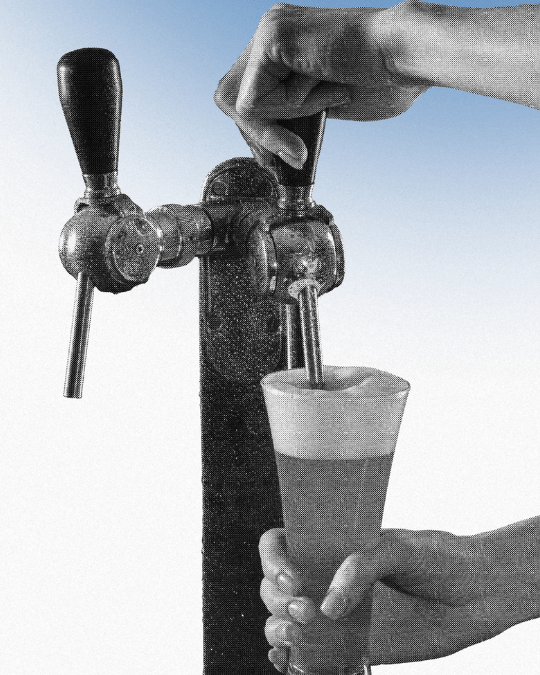
 Many products marketed as "craft" beer are actually owned by major corporations such as Anheuser-Busch InBev, Molson Coors, or other global beverage companies. The beer industry has experienced extensive consolidation, with AB InBev alone managing over 500 brands globally. While the craft beer movement demonstrated that market disruption is achievable, numerous successful independent breweries have subsequently been acquired by these industry leaders. Currently, the most promising opportunities for the new market entrants exist in genuinely local brewing operations and the rapidly expanding non-alcoholic beer segment. 

Market Size

~$675.5B (2025), growing 2.08% annually through 2029

Notable Consolidation Moves

PAIN POINTS
WHO'S HURT
ENTRY OPPORTUNITIES
  • "Craftwashing" by major producers

  • Distribution challenges for truly independent brewers

  • Market saturation in traditional craft segments

  • Limited options for health-conscious consumers

  • Regulatory hurdles for small producers
  • Consumers misled by "craft" marketing from corporate breweries

  • Authentic craft brewers unable to secure distributor relationships

  • Local economies missing out on economic benefits of independent brewing

  • Beer enthusiasts with fewer genuine choices than apparent

  • Small breweries struggling against preferential distribution agreements
  • Focus exclusively on premium non-alcoholic craft styles

  • Build hyper-local brewery models with unique experiences

  • Develop subscription boxes featuring independent brewers

  • Innovate with unique, locally sourced ingredients

  • Create brewing technology improving small batch quality

Disruption Spotlight: Craft Beer Without the Hangover

Athletic Brewing Company produces exclusively non-alcoholic craft beers, achieving an $800M+ valuation to become the market leader in NA craft beer. Their approach combines traditional brewing methods with proprietary technology to create full-flavored options for health-conscious consumers, addressing a market segment that AB InBev and other beer giants had largely overlooked. 


How to Break Into A Consolidated Industry

Scroll for more

Scroll for more

Scroll for more

Scroll for more

  • A flurry of acquisitions in a specific industry
  • Private equity involvement in traditionally fragmented markets
  • Unexplained price increases outpacing inflation
  • Declining service quality or availability
  • Long wait times that didn't exist previously
  • Customer complaints about standardization

  • Who owned the top companies in this industry 10 years ago vs. today?
  • What's happened to prices in the last 5-10 years compared to inflation?
  • Has service quality or customization declined?
  • Are there artificial supply constraints or backlogs?
  • What do frontline workers say has changed?

  • A sense of resignation ("that's just how it is now")
  • Workarounds becoming industry standard
  • DIY solutions proliferating
  • Online communities filled with complaints
  • Professionals leaving the industry

  • Customers willing to pay premium for alternatives
  • Employees leaving consolidated companies
  • Regional success stories bucking the trend
  • Early-stage competitors gaining traction
  • Media coverage of industry problems

Your Next Steps

Subscribe to The Hustle for more business opportunities and insights.