<link rel="stylesheet" href="https://53.fs1.hubspotusercontent-na1.net/hubfs/53/hub_generated/template_assets/1/207928094053/1777556954236/template_footer-core-non-critical.min.css">

Free Playbook

Plan, Pitch, Prove: An Executive's Playbook to Win Budget Approval and Leadership Support for Any Marketing Campaign

Stop losing budget battles. Get the exact framework, templates, and talking points that turn 'maybe later' into approved marketing campaigns.

Explore HubSpot's AI-Powered CRM, designed to turn creative AI ideas into automated workflows across marketing, sales, and service.

You walk into a budget meeting with a campaign idea you know could work. Leadership looks at you and says, “Show me the ROI.” 

Or, my personal favorite, “We don’t have budget for that right now.”

I’ve had this conversation more times than I can count — at early-stage startups, at HubSpot (where I spent nearly eight years helping grow revenue from $170M to $1.7B), and now at Zappi. The setting changes. The people change. The question doesn’t.

Why should we give you money for this?

Most marketers approach these conversations backward. We talk about tactics. We explain channels. We get defensive when someone questions our numbers. Before long, we’re negotiating line items instead of focusing on the work that actually moves the business.

There’s a better way. I use three steps: Plan, Pitch, Prove.

Not because it’s clever, but because it answers the only three questions leadership actually cares about:  What are you doing? Why does it matter? How will we know it’s working?

Let me show you how this works.

Nataly Kelly is a seasoned business and tech executive, international business expert, and longtime Harvard Business Review contributor on topics of global business and international marketing. 

She is Chief Marketing Officer at Zappi, a consumer insights platform. Previously, Nataly served at HubSpot as Vice President of Marketing, Vice President of International Operations and Strategy, and Vice President of Localization, where she helped drive international expansion. 

Meet the Expert: Nataly Kelly

Phase One

Plan: Know Where Your Marketing Dollars Go

marketing budget

Before you ask for more budget, you need a clear understanding of where your current budget actually goes.

Leadership won’t hand you more money if they don’t trust how you’re spending what you already have. That sounds obvious. In practice, it’s where many marketing leaders struggle.

One of the marketing leaders I mentor learned this the hard way at one company, where he kept asking for more budget for demand generation.

His CEO finally stopped him and said, "Walk me through exactly how you're spending the marketing budget right now."

He was caught off guard. As a busy marketing leader juggling multiple priorities, he had taken his eye off the ball. He had a general sense of his spending, but in that moment, he couldn't clearly break down the specifics—where every dollar was going and why each investment mattered.

That moment led him to recognize the need to change his approach to every budget conversation. I shared my framework with him in order to help.

I developed a framework I now use consistently: Brand, Demand, Land, Expand. Every marketing activity fits into one of these four plays, and each answers a simple question about what you’re trying to accomplish.

The Framework: Brand, Demand, Land, Expand

How to Use This Framework

Understanding the four plays is only useful if you apply them honestly. Here’s how I put this framework to work in practice.

Service Agent_Illustrations_Color_LightBG

Audit Your Current Marketing

Start with your calendar. Go through the last month and categorize every marketing activity — every meeting, campaign, and deliverable — into one of the four plays.

You have to write this down. What you think you’re spending time on and what you’re actually spending time on are almost never the same.

When I run this exercise with teams, the pattern is remarkably consistent. Most discover they’re spending roughly 30% of their budget and resources on Brand, but have very little intentional focus on Land and Expand. 

That isn’t always wrong. But it should reflect what the business actually needs — not what happens to be loudest.

At one company, we were generating roughly 500 leads a month. On paper, the pipeline looked strong. In reality, we were missing revenue targets, and sales was frustrated.

When I audited our work, the issue was obvious. We had almost nothing in Land. Our most recent case study was 18 months old. There was no comparison content, no ROI justification, and no pricing guidance. Sales was stitching together screenshots from the website to close deals.

We didn’t have a Demand problem. We had a Land problem.

Once I could articulate that clearly, the budget conversation changed. I wasn’t asking for more money to generate leads. I was asking to reallocate resources to close the deals already sitting in the pipeline.

Nataly-Kelly-Keynote-Speaker-1
Nataly Kelly

CMO at Zappi | Previous VP of Marketing, HubSpot

Identify Your Gaps

Once you see how your time is actually allocated, ask the harder question: Does this align with the business's needs right now?

If close rates are suffering and you have almost nothing in Land, that’s a gap. If customers are churning and Expand is an afterthought, that’s a gap. If no one recognizes your brand and you’re over-invested in paid Demand, that’s a gap.

The framework makes these imbalances visible and gives you a clear story to tell leadership: “We need budget for X because we have a gap in Y — and that gap is costing us revenue.”

Customer Journey_Illustrations_Color_LightBG

Classify Every Campaign Before Launch

Before you launch anything — before the brief, before production — ask one question: What play is this?

Pick the primary goal.

Some campaigns touch multiple areas. A webinar might build Brand and generate Demand. But which outcome matters most? If you can’t answer that clearly, you probably don’t have clear success metrics either.

This one question prevents scope creep. It forces clarity, and it makes campaign approval and post-launch reporting far easier.

Allocate Budget Intentionally

Once you've completed the audit and can see where your time is actually going, the next step is to map your budget to those same four buckets. What percentage of your marketing budget is going to Brand activities? How much to Demand? What about Land and Expand?

Then you ask yourself the hard question: Does this allocation make sense for the business's current needs?

There's no perfect formula here, which I know is frustrating for people who want a clear answer. But a company that's launching a new product is going to weight way more toward Brand and Demand than a company that has a full pipeline but terrible close rates. If you're bleeding customers, you better be spending real money on Expand. If no one has heard of you and your cost per lead is through the roof, you need Brand investments.

There's no one-size-fits-all budget split. What matters is being intentional about your allocation instead of just repeating last quarter's plan because that's what you've always done. Look at what your business actually needs right now and allocate accordingly.

I've found that when I walk into a budget meeting with this breakdown—the four buckets, the percentages, and the rationale for each allocation—the dynamic changes. Instead of defending line items or justifying individual expenses, we're having a strategic conversation about business priorities. That's exactly where the discussion should be.

Phase Two

Pitch: Speak Leadership's Language

Once you’ve done the planning, the challenge becomes alignment.

This is where many marketing pitches fail. Not because the ideas are weak, but because they get stuck in tactics. Leadership doesn’t need to understand your channels. They need to understand how marketing supports the business.

The framework translates marketing work into outcomes anyone in the room recognizes: awareness, pipeline, revenue, and customer value.

Different stakeholders care about different outcomes.

HubSpot_Meeting_Illustration_Color_LightBG

When Priorities Conflict

Reality check: Everyone wants more from marketing. Sales wants more leads, CS wants more retention content, Finance wants better ROI, and your CEO wants all of it immediately.

You can't do everything.

The framework helps you have honest conversations about trade-offs. When someone asks for something, map it to the buckets: "That's a Demand request. Here's what I'm currently doing for Demand, and here's where it sits in my priorities. If you want me to do more here, what should I do less of? Are you comfortable with Land efforts slowing down?"

This makes trade-offs visible. You're not saying "I can't do that", you're saying, "Here's what it would cost to do that."

It completely changes the dynamic. Instead of defending yourself, you're having a strategic conversation about resource allocation. People get that. They understand trade-offs. What they don't understand is saying no without explaining why.

The framework helps you have honest conversations about trade-offs. When someone asks for something, map it to the buckets: "That's a Demand request. Here's what I'm currently doing for Demand, and here's where it sits in my priorities. If you want me to do more here, what should I do less of? Are you comfortable with Land efforts slowing down?"

Nataly-Kelly-Keynote-Speaker
Nataly Kelly

CMO at Zappi | Previous VP of Marketing, HubSpot

Common Patterns (and How to Fix Them)

Phase Three

Prove: Choose Metrics That Matter

Leadership supports campaigns when they trust you can measure results. But most marketers screw this up by tracking everything and proving nothing.

You don't need 20 metrics. You need the right metrics.

Every campaign belongs to one of the four buckets, and each bucket has specific metrics that matter for that type of work. Here are some examples; these can be moved flexibly between categories depending on your company's specifics.

Brand Metrics

Brand is the hardest to measure in the short term, but you can still prove it's working.

What to track:

  • Website direct traffic (people typing your URL)
  • Brand search volume (people Googling your company name)
  • Social media followers and engagement
  • Newsletter subscribers
  • Podcast downloads, video views, content reach

Brand is a trend game. If brand search increases 30% over six months, that's proof people are learning about you. If your cost per lead drops while volume stays steady or grows, Brand is doing its job by making everything else more efficient.

Don't expect Brand to show results in 30 days—it won't. But over six months or a year, you'll begin to see the impact.

Demand Metrics

Demand is the easiest to measure, which is why most marketers live here.

What to track:

  • Leads generated
  • Marketing qualified leads (MQLs)
  • Cost per lead
  • Demo or trial requests
  • Email open and click rates
Here's the trap: a thousand unqualified leads won't help you hit revenue goals. Track lead quality, not just lead volume. I'd rather have 200 qualified leads than 500 random ones. The math always works out better.

Land Metrics

These metrics prove marketing is helping close deals.

What to track:

  • Lead-to-customer conversion rate
  • Sales cycle length
  • Win rate
  • Customer acquisition cost (CAC)
  • Average deal size

If your win rate increases after launching new case studies, you've proven Land investments pay off. If your sales cycle drops by two weeks after you create better sales content, that's measurable revenue impact.

Land metrics tie directly to revenue, and leadership loves this. Finance loves this. Show them the before and after.

Expand Metrics

Expand metrics connect marketing to revenue growth from existing customers.

What to track:

  • Customer retention rate
  • Net promoter score (NPS)
  • Referrals generated
  • Upsell/cross-sell revenue
  • Customer lifetime value (LTV)
  • Reviews and testimonials collected

At HubSpot, we found that customers who engaged with our educational content in the first 90 days were 40% more likely to upgrade. That single data point justified significant Expand investments. When you can demonstrate that kind of ROI, budget approval becomes much easier.

Pro Tip

Set Benchmarks Before You Launch

Don't wait until after a campaign ends to determine whether it worked. Define success before you pitch the budget.

"I'm proposing a six-month Brand campaign focused on thought leadership. I'll track brand search volume, direct traffic, and cost per lead. Based on similar campaigns at other companies, I expect brand search to increase 25%, direct traffic to grow 15%, and cost per lead to drop 10% over six months."

When you set clear benchmarks upfront, proving results is simple. You either hit them or you don't. If you don't, you learn what to adjust next time. Leadership respects that honesty.

Marketing_Illustrations_Color_LightBG

The One Metric That Gets Budget Approved

If you can track only one metric, track the customer acquisition cost (CAC) trend over time.

Marketing is fundamentally about making it easier and cheaper to acquire customers. If your CAC declines while customer quality remains the same or improves, you're winning. Leadership will give you more budget.

Everything else is noise. CAC is signal.

Put It Into Practice

Quick Start: Try This Before Your Next Budget Meeting

You don't need to overhaul your entire operation to make this work. Just try this. It takes five minutes but gives you clarity on where to focus and a story that leadership will understand and support.

Available

  • List your top 5 marketing activities—the campaigns taking most of your time right now.
  • Label each one as Brand, Demand, Land, or Expand. Pick the primary category.
  • Notice the pattern. Where are you heavy? What's missing?
  • Now match it to what the business actually needs. If your company needs to close more deals but you have zero Land activities, that's your gap and your story.
  • Pick one gap to fix and build your next campaign pitch around that.

The Bottom Line

Getting marketing campaign approval shouldn't be this hard, but it is hard when you can't explain what you're doing in terms that people outside marketing actually understand.

Brand-Demand-Land-Expand gives you a simple language. It helps you audit where resources are going, spot the gaps, and pitch campaigns that make sense to Finance, Sales, the CEO—everyone.

Every marketing activity fits into one of four buckets: building brand, generating demand, landing customers, or expanding relationships. When you view your work through that lens, budget conversations shift from negotiations to strategic discussions.

Align your priorities with the business needs. Pitch in language stakeholders care about. Prove results with metrics that actually matter.

That's how you win support—and budget—for the campaigns that will move your business forward.

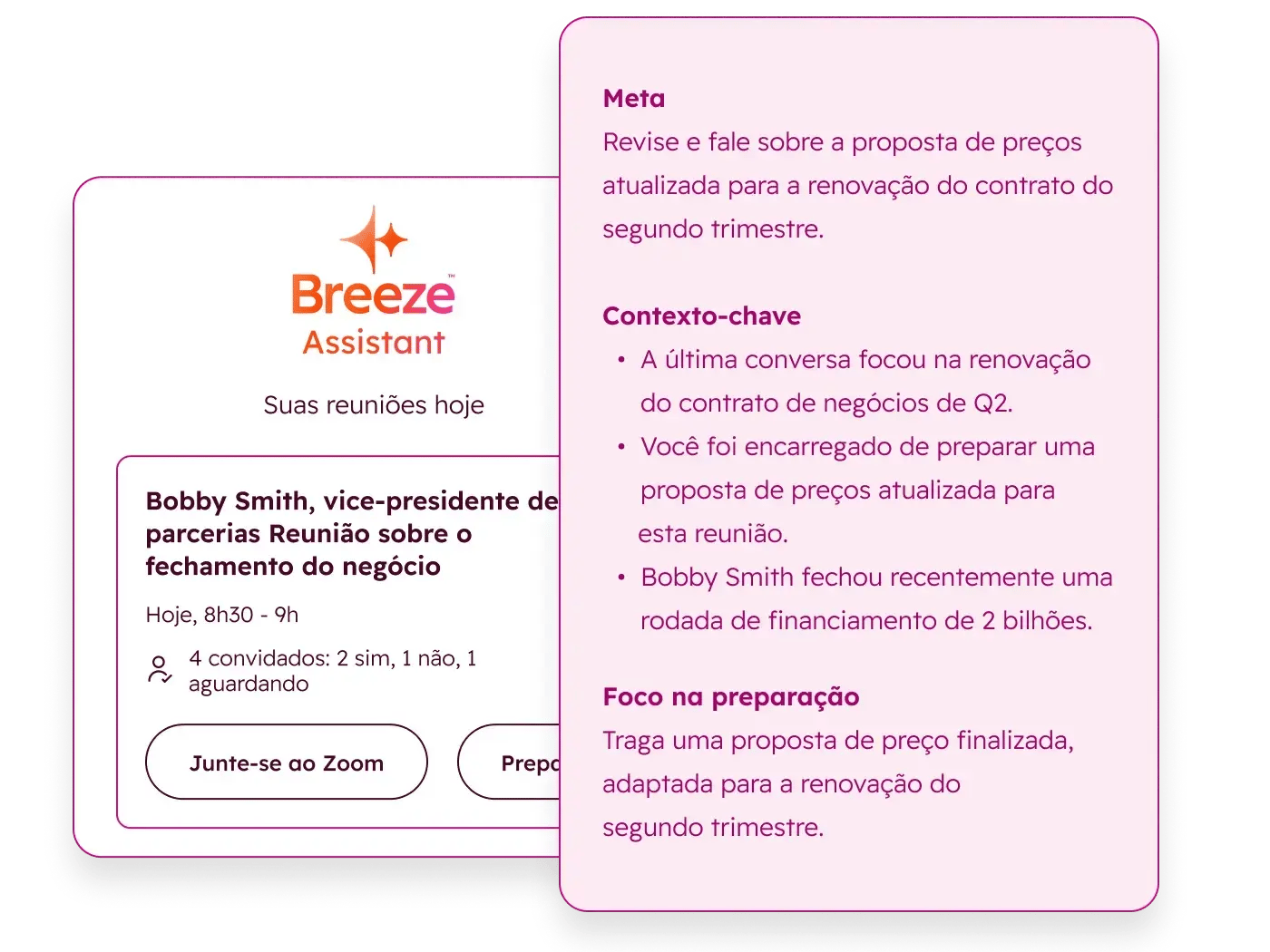
Breeze – Meeting Insights_pt

HubSpot’s Breeze: AI That Works Where You Do

AI tools built into HubSpot to help you work faster, save time, and focus on what matters most. From writing to reporting, Breeze helps you move quicker and get more done.