<link rel="stylesheet" href="https://53.fs1.hubspotusercontent-na1.net/hubfs/53/hub_generated/template_assets/1/207928094053/1774526404639/template_footer-core-non-critical.min.css">

Creators Column

The Grind Is Broken: What Workers Really Think About Jobs in 2025

Discover exclusive data on how 400+ professionals are is using AI to build side hustles, find work-life balance, and take control of their professional lives. Learn what the viral "lazy girl jobs" movement really means—and why it's reshaping the future of work.

Companies demand more, deliver less, and expect gratitude in return. Meanwhile, layoffs keep coming, budgets are cut to the bone, and the only message from leadership is the same recycled line: “Work harder, we’ll get through this.”

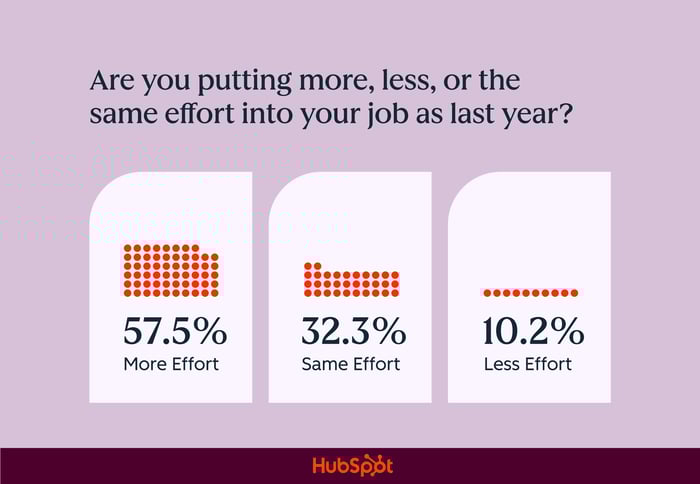
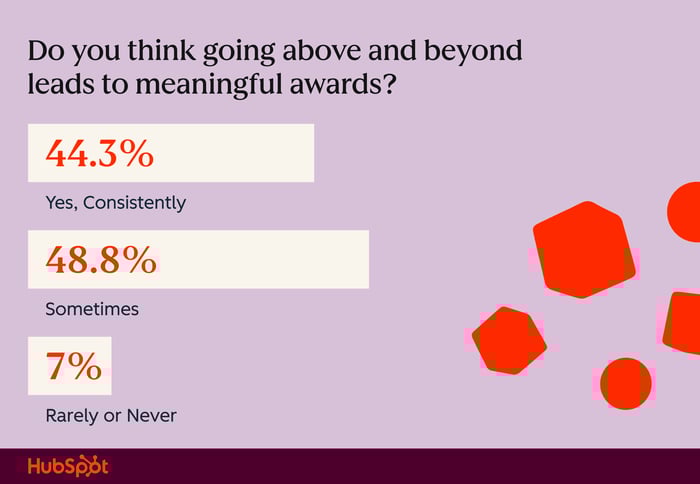
Almost 60% of people said they’re putting in more effort than last year, but only 40% think that effort is paying off, according to a HubSpot survey of 402 working professionals.

That means a huge chunk of the workforce is working overtime for scraps. The cost is burnout. 

This disconnect is exactly what I’ve been calling out in my newsletter, Ms. Anti Work. People are waking up and questioning the old career ladder. They’re embracing AI before their employers can catch up. And, professionals are openly admitting they’d trade money for time, balance, and peace. 

Let’s dive into the real state of work in 2025 and what our survey found.


Gabrielle Judge is a content creator, TEDx speaker, and Entrepreneur magazine contributor who coined the viral "lazy girl job" trend and advocates for work-life balance through her platform "Ms. Anti Work" with hundreds of thousands of followers across her social media platforms.
 
Who is Gabrielle Judge?

My Career Journey

In 2023, I called out what so many of us were already feeling: the grind wasn’t paying off. I coined the term “lazy girl jobs” to describe it. The phrase isn’t actually calling people lazy, and it’s not about gender. The idea is that people are done with the performative hustle that drained us without delivering anything back.

Lazy girl jobs aren’t about slacking off. These are roles that give you balance, freedom, and the space to actually live your life. A job where you have autonomy over your money, your schedule, your energy, and your growth. They’re a version of work that doesn’t run you into the ground. 

And, more people are pushing back against the career paths that no longer serve them.

Since that viral message, this idea has spread like wildfire. I believe it’s because it taps into something primal that we’re all feeling right now: the grind is broken, and it’s time to rewrite the rules.

To test just how deep this goes, I partnered with HubSpot to capture today’s workplace attitudes. The data is telling.
Work Effort vs. Reward

Two

Quiet Quitting

Have you ever quiet quit

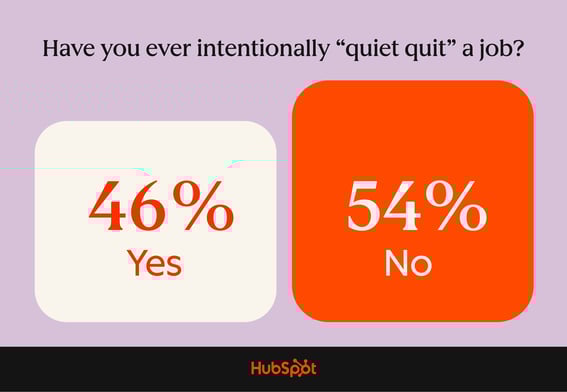
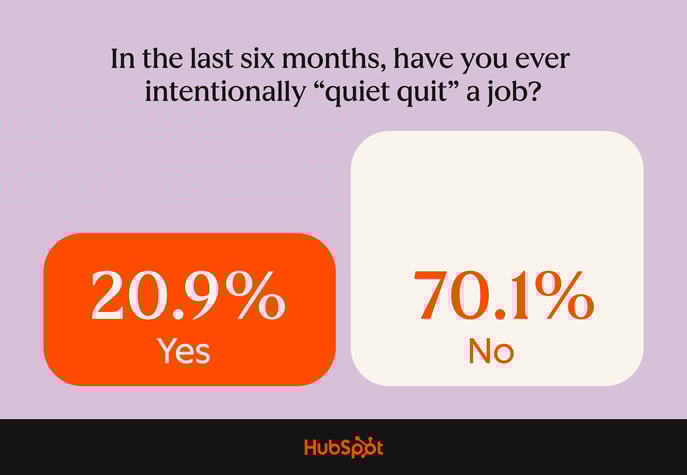
Almost 50% of people admitted they’ve “quiet quit” at some point. However, only 21% have done it in the last six months. I wasn’t surprised by that.

Quiet quitting had its viral moment, but it hasn’t become the default way people work.

The reasons people gave for disengagement? Lack of recognition, poor management, low pay, burnout, and no growth opportunities. That list says everything: the problem is systemic. Quiet quitting is a symptom and a way to cope with an unfair setup. 

Instead of disengaging to survive, the goal is to build a role that fits your values, energy, and lifestyle from the start. If you don’t have growth opportunities, recognition, or fair pay, the answer isn’t to silently fade into the background. It’s to redefine the job so it works on your terms.


Have you quiet quit in last six months

Three

Career vs. Well-Being

This section of the survey was divisive. Of respondents, 67% said they’d take a promotion over a lower-stress job. Meanwhile, a solid 33% said they’d choose less stress.

To me, that looks like a workforce fighting with itself. People know they’re “supposed” to want the promotion, the bigger title, and the bigger paycheck. That’s what corporate conditioning has drilled into us for decades. 

But then you look at how people are actually living, and it’s a different story: a third of workers are openly saying they value peace of mind over climbing the ladder.

People are asking, “Does this promotion actually make my life better, or does it just pile on more stress with the same old tradeoffs?” More and more people are realizing that if the ladder leads straight into burnout, maybe it’s not worth climbing.

Four

AI in the Workplace

Two-thirds of people said they’re already using AI at work, and another 18% want to start. Only 9% flat-out reject it. 

Here’s what I think. Workers aren’t waiting for “official rollouts” or “leadership approval.” They’re using AI because they need relief. They’re trying to cut down the busy work, protect their energy, and survive unreasonable workloads. Meanwhile, executives are still stuck in strategy meetings about what AI might mean for the future.

AI is one of the best tools we’ve ever had for designing jobs that work for you instead of draining you. So that’s my advice for workers feeling the pressure: Automate the repeatable, scrap the performative nonsense, and free yourself up to actually do the creative or strategic work you were hired for.

If you’re using AI to claw back your time, you’re not lazy. You’re smart.

Burnout

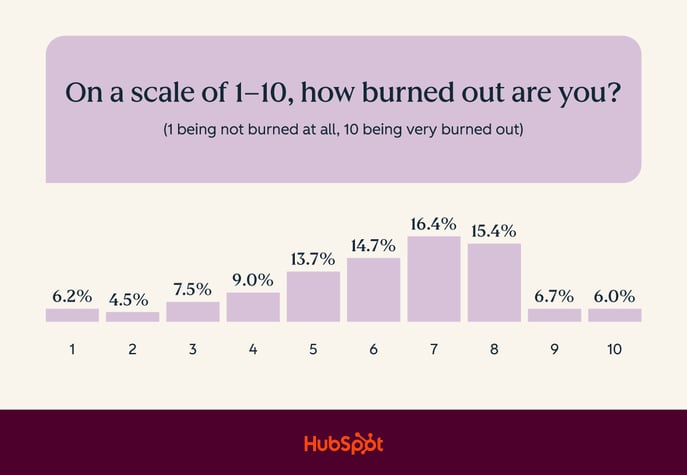
When I asked people to rate their burnout on a scale of 1 to 10, most answers fell between 5 and 8. That constitutes as moderate burnout. 

What’s most shocking is that only 6% said they weren’t burned out at all.

That tells me that burnout is now the majority's experience, which is a huge problem. When something becomes normalized, companies stop treating burnout like something urgent to fix. They start treating the grind like “part of the job.”

I think this is exactly why Lazy Girl Jobs has hit a nerve. It gave people permission to say, “Wait, why am I accepting constant burnout as normal?” We shouldn’t need to crash in order to get rest. We shouldn’t need to hit an 8 out of 10 just to justify boundaries.

If everyone around you is moderately burned out, the system is broken. And if the system is broken, you’re protecting yourself by opting out of it.

How burnt out are people
what pay cut would you take for more leisure time

Pay vs. Personal Time

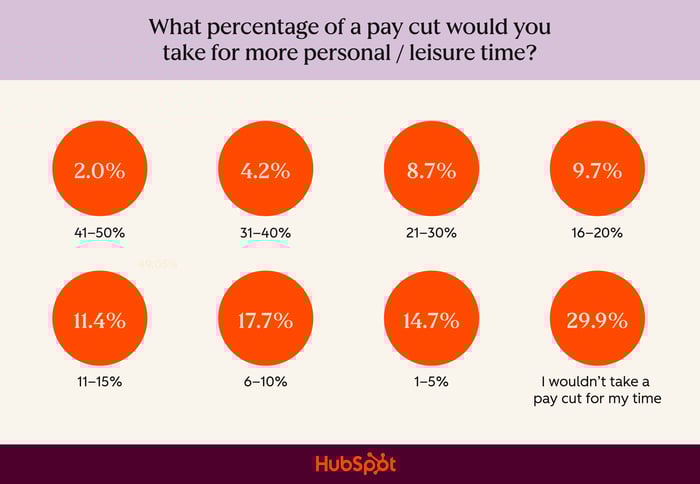
When asked if they’d take a pay cut for more personal time, 30% said now, while 70% said yes. 

But here’s where it gets interesting: 

  • The biggest percentage of people (18%) said they’d give up 6–10% of their pay. 
  • Nine percent said they’d give up 21–30%. 
  • And a few said they’d even sacrifice more than 50%.

That tells me many workers are willing to give up financial growth for balance, which goes directly against the corporate narrative that money is the only motivator. 

This trend loops back to the earlier career vs. well-being answers. On the surface, 67% say they’d rather get a promotion than have a lower-stress job. But deeper down, a lot of them are actually open to less pay if it means more peace.

The State of Work in 2025

The data makes it obvious: the grind is broken. People are burning out, promotions don’t guarantee happiness, and AI is already reshaping how we work … whether leadership likes it or not. Workers are quietly admitting they’d give up money for balance, while still being told to chase the next rung on a ladder that leads nowhere.

The old playbook for career success simply doesn’t work anymore. 

So here’s my call to you: Stop waiting for corporate to catch up. Stop waiting for recognition that may never come. Build the job that works for you. Use the tools. Set the boundaries. Protect your time.

Because if the system is designed to drain you, opting out isn’t laziness — it’s resistance. And resistance is how change begins.