<link rel="stylesheet" href="https://53.fs1.hubspotusercontent-na1.net/hubfs/53/hub_generated/template_assets/1/207928094053/1779380660113/template_footer-core-non-critical.min.css">

Marketer's Guide to Meta

Tactics for Facebook + Instagram

What's in your social media strategy?

Schedule a free demo to see how Social Media Management can elevate your Meta marketing strategy!

Marketing goes Meta

Facebook + Instagram: The Reel Deal for Marketing's Future

What's in your social media strategy?

Whether you run a local business or an international enterprise, there's a lot to love—and a lot to learn—about social media marketing. Social media enables deeper connections with global audiences in real time, and new content formats like Stories, Reels, and polls can change how marketers interact with customers on a daily basis. In the age of content creation, social media is offering a bigger opportunity for marketers—and a bigger lift for small teams.

Knowing the right platform, or mix of platforms, for your business is key to carving out an effective marketing strategy. That's where Meta comes in.

Meta's largest platforms, Facebook and Instagram, have become household names for consumers, marketers, and business owners. Marketers who create a regular drumbeat of content for these platforms often find that they support better performances for their businesses online and in person. This uptick in engagement often happens because accounts with active presences show that they're modern, adaptable, and relatable—all important qualities for establishing trust with consumers. 

What customers look for on

Remember: these categories aren't exclusive. Because Facebook and Instagram fall under the Meta umbrella, marketers can cross-post content between platforms and speak to multiple audiences at once.

"Partnerships, affiliates, and collaborations with similar audiences can help you grow your content and reach more customers."

Jacqueline Snyder

The Product Boss

Creating a social media ecosystem? Ask yourself:

  • Does your social media marketing strategy take Facebook and Instagram into account?
  • Are you using a mix of organic and paid content to maximize engagement?

  • How could activating both platforms help you meet goals for your business?

Global presence and mass appeal make both platforms valuable resources in a marketer’s toolkit. And if you’re looking to grow brand awareness, deepen customer relationships, and convert leads into customers, Facebook and Instagram might be right for you.

We recognize that consistent social media activity is key to business growth. But we also know that unoptimized posts don’t lead to results. When you activate Facebook and Instagram, it’s a good idea to develop a well-rounded social media strategy that encompasses organic and paid content.

We’ve put together an all-in-one guide to Meta’s biggest platforms—Facebook and Instagram—so marketers can develop attuned strategies that drive engagement. By reading this guide, you’ll learn how to:

  • Use audience information to choose the right platform for your business
  • Create business accounts on Facebook and Instagram
  • Leverage organic content, trends, and popular formats to foster community
  • Develop paid advertising strategies that attract new customers
  • Measure your performance over time and iterate on successful tactics
  • Support your long-term growth with software

Jump in now with our Quickstart Guide to Meta Checklist!

Chapter One

Facebook + Instagram 101: Platform Facts You Should Know

an illustration showing a woman using social media, surrounded by social media icons

What is Meta?

Before we dive into tactics on developing content, it’s a good idea to take a step back and understand:

  • Meta's mission, reach, and audience

  • Facebook's content types

  • Instagram's impact with younger audiences

  • How to choose the right platform(s) for your business

To start, let's take a closer look at Meta. Created by Mark Zuckerberg—the original creator of Facebook— Meta is a future-focused technology organization looking to revolutionize online communication. The company owns five social media platforms, including: Facebook, Messenger, Instagram, WhatsApp, and Meta Horizon.


Meta also invests in the modern metaverse experience, with technology like VR headsets, smart glasses, and AI software. The company is dedicated to growing connections in virtual spaces—and innovations on Facebook and Instagram attest to that vision.

With a strong background in Facebook, it’s not surprising to see that Meta has exponential reach around the globe. As of March 2024, Meta’s daily active people (DAP) count reached an average of 3.24 billion. Meta’s advertising presence is active— and growing—as well, demonstrating 20% year- over-year growth as of March 2024.

Source: Meta, Meta Reports First Quarter 2024 Results, April 2024

Why does Meta matter?

Meta is built to grow. Across its platforms, the company offers a variety of tools, advertising formats, and organic content templates that equip marketers with the tools they need to grow their own business. If you're already using Facebook and Instagram to reach customers, you're on the path to engagement. But understanding who uses these platforms, and what resonates with them, will empower you to make deeper connections on some of the largest social media platforms in the world. 

What is Facebook?

For more than 20 years, Facebook has defined—and redefined—what a social media platform is capable of. Facebook connects people worldwide though a series of text-based posts, photos, video content, and livestreams. The platform also integrates with Messenger, Meta's instant messaging service that has grown to mainstream popularity. 

Facebook is a go-to social media platform for businesses of all sizes. Its versatile content formats, intuitive Ads manager, and worldwide appeal are helpful for marketers looking to develop a long-term presence—or simply boost sort-term engagement. 

Surveyed consumers and brands using Facebook in 2023

Organic content on Facebook

Business and personal users alike have access to a variety of post formats that can drive engagement in an authentic way. Content types include:

  • Text posts
  • Photo posts
  • Video posts, including Reels
  • Location-based check-ins
  • GIFs
  • Life events
  • Fundraising
  • Facebook Lives

How Facebook ranked amongst Gen Xers and Millennials in 2023

Source: HubSpot, 2024 Consumer Trends Report, 2024

Paid advertising on Facebook

Business accounts on Facebook can access a variety of paid advertising formats, including:

  • Static image ads
  • Video ads
  • Carousel ads for images, videos, or both
  • Collection ads
Facebook collection ad (vertical)

What are collection ads?

Collection ads act like mini catalogs for users to browse—and shop from. Catalog ads can be organized in storefront or lookbook templates.

instagram logo

What is Instagram?

Instagram is the iconic image-sharing platform that took social media by storm after is 2010 launch. Since Meta's acquisition of the platform, Instagram has offered seamless connections between its capabilities and Facebook's offerings. And, with ambitious new projects like Threads on the rise, Instagram is powerful social media platform that consumers visit every day to connect with friends—and marketers use to connect with consumers. 

Surveyed consumers and brands using Instagram in 2023

Organic content on Instagram

As an image-based platform, Instagram highlights graphics, videos, carousels, and other posts that prioritize motion. Organic content on Instagram includes:

  • Images and carousels
  • Reels
  • Videos
  • Lives
  • Stories
  • Stories highlights
  • Shoppable posts
example of an instagram reel

What are Reels?

Reels are short-form video posts on Instagram. You can make Reels up to 90 seconds long.

Marketing on Instagram

Similar to Facebook, many businesses advertising on Instagram choose to have a dedicated business account where they regularly post organic content. This strategy can help boost discoverability among new and existing users. If your goal is to go viral on Instagram, you'll likely want an established account to manage the influx of traffic. 

How Instagram ranked amongst Gen Zers and Millennials in 2023

Source: HubSpot, 2024 Consumer Trends Report, 2024

Choosing the Right Meta Platform for Your Business

Now that you know more about Meta's largest social media platforms, it's time to ask: which one is right for your business?

Adding Facebook, Instagram, or both platforms to your marketing strategy can help you reach larger audiences and develop deeper connections with customers who are attuned to the social media scene. If you already have an account on one or both platforms, but you're struggling to hit your KPIs, consider how reevaluating your strategy can help you narrow in on tactics that work for your business.

Steps to choosing a Meta platform

  1. Identify your audience. Does your business primarily serve younger customers in the Millennial or Gen Z demographics? Do you instead have a wider audience, including Gen Xers? Consider how a strategy with both platforms can help you meet your audience where they are.

  2. Set your budget. If you’re planning on using paid advertising to boost your business, it’s a good idea to set your budget early on. Check out Meta’s all-in-one Ads Manager for more information on setting budgets and managing campaigns.

  3. Explore prices. Depending on your campaign objectives, you’ll be able to access a variety of ad types that drive different results. Check out the Meta Business Help Center for more information on ad types and prices.

  4. Choose a marketing strategy. Decide if you’ll opt for an organic, paid, or blended strategy to reach your customers. You can change your strategy at any time.

  5. Consider integrating tools. After your ads go live, you’ll need to measure their performance. Meta’s Ads Manager offers some capabilities, but external software can provide more in-depth analytics.

How to Develop a Business Presence on Facebook + Instagram

Going Beyond the Basics

Expanding your business’s digital footprint can feel like an overwhelming and time-intensive process.

Between multiple options for organic content and the multi-step process for running paid ad campaigns, there’s a lot to juggle when marketing on Facebook and Instagram.

But getting started on either platform is more simple than it might seem. Let’s explore four steps to activating your business on Facebook and Instagram:

Activate Your Business

1
Create your account
2
Explore your account
3
Analyze advertising resources
4
Set up backend management

Step #1: Create your account

Activating a robust marketing presence on Meta starts with a simple step: creating your account.

From there, you can use a variety of features, organic formats, and advertising models to customize your business’s profile. Already have an account on Facebook or Instagram? Take a second look and make sure it’s a business account. If you’re using a standard account, you won’t have access to the suite of tools and benefits available in the Meta Business Suite. To convert a user account to a business account, just visit your account's settings. Swapping over is easy on both platforms—but if you're starting from scratch, head to your platform of choice and create your profile.

Step #2: Explore the platform


Now that your account is ready to go, take some time to familiarize yourself with the platform’s interface. Facebook and Instagram both have user-friendly designs that make it simple for marketers to explore account settings, post content, and find user profiles.

At this stage, it’s a good idea to begin scoping out your competition. Consider making a list of your business’s competitors and checking out their profiles. If the competitor doesn’t have an active Facebook or Instagram presence, consider how you can use that to your advantage.

Free Resource: The 2024 Instagram Engagement Report

screenshot of the instagram insights dashboard

Step #3: Analyze advertising resources

Meta offers a variety of helpful resources for marketers to use across Facebook and Instagram. Consider bookmarking the Meta Ads Manager for the most up-to-date information on advertising specs, prices, and best practices on platform-specific advertising.

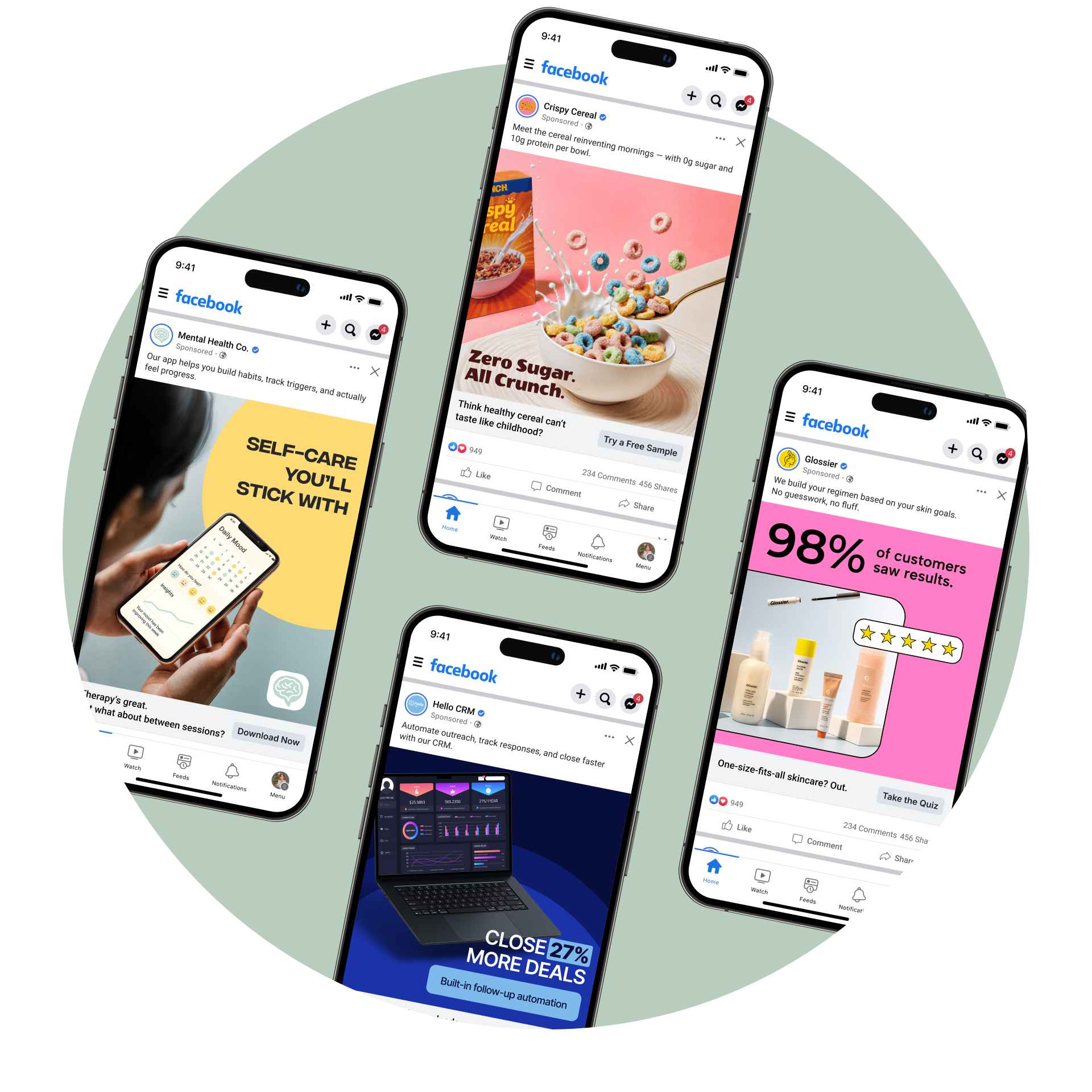
In addition to Meta’s tips, tricks, and guides, you can use existing content on Facebook and Instagram to inform your strategies. Let’s take a look at three Meta ad examples, and why they’re effective.

While these advertisers used different approaches to appeal to their target audiences, they were all effective at driving awareness—and earning clicks. Consider how analyzing more platform content can help you carve out a strategy that works for your business. 

Step #4: Set up backend management

Before you launch your campaigns or develop your organic posting cadence, take the time to do some preliminary background work. After all, marketing is more than posting—it's a careful, comprehensive process involving customer relationship management (CRM), automation, and analytics. Whether you're activating on Facebook, Instagram, or both platforms, setting up analytics on the backend can help you: 

Facebook ad examples

  • Streamline content production
  • Build trust through engaging user interactions
  • Track organic content performance
  • Measure paid advertising analytics
  • Iterate on successful tactics
  • Learn from underperforming ads

By following these steps, you can create an account that's ready for strong pulse of organic content. 

Fostering Community: The Role of Organic Content

Don't Fear the Algorithm

In the modern era of marketing, organic content offers large potential to build visibility, trust, and purchase intent with consumers worldwide. By incorporating content creation into your marketing strategy, you can demonstrate relatability and reliability at the same time. And, when it comes to paid advertising, organic content can offer something tangible for users to grab onto, making sponsored content or other paid ads feel more authentic.

The benefits of organic content are clear—but so are the challenges.

Facebook and Instagram offer unique puzzles that marketers face every day. On Facebook, standing out from the large pool of existing accounts can be difficult. And, on Instagram, content that's not optimized for the algorithm can effectively become shadowbanned—where few to no users ever encounter an account or its posts in their feeds.

So, with these challenges in place, how do marketers go about creating organic content that users actually see?

Optimizing content for Facebook and Instagram will come with time-but for now, let's take a closer look at eight tips you can use to start creating a drumbeat of high-quality content that users will enjoy.

Eight tips for creating organic content on Facebook and Instagram

  1. Make your account discoverable
  2. Optimize your profile
  3. Create a content strategy
  4. Build a content calendar
  5. Stay active
  6. Stay on brand
  7. Lean into trends
  8. Keep an open mind

"To truly connect, you need to understand deeply what your audience desires and expects: what is their persona[,] and why should they care about your message? Only then can you craft messages that resonate deeply and authentically."

Sarah Chen-Spellings

Host of Billion Dollar Moves

colorful keyboards

Tip #1: Create your account

If your Facebook account just got a refresh-or you've started posting Reels on Instagram for the first time-you can boost early visibility by cross-promoting posts on other social media platforms.

Think about platforms where your business is already established:

  • Do you have a LinkedIn page?
  • Are you active on TikTok?
  • Does X (Twitter) still align with your identity and goals?

Consider calling out your new account on your existing socials—or providing a link in your page's "About" section.

In addition to cross promotion, you can also explore ways to make the most of your new platform. Facebook, for example, offers a verification pathway that grants your account a checkmark to show you're the official source for your business. You can optimize your content for the Instagram algorithm by taking note of trending topics, sounds, and filters to get noticed more quickly.

"The platform algorithm does the work for you! So with organic [content] you do not need to worry about targeting as long as you're speaking to your audience. When it comes to performance, calculate your results on a CPM basis and rest assured that the algorithm is doing all the work to put you in front of the right people."

Ramon Berrios

Host of DTC POD

Tip #2: Optimize your account

As followers start trickling-or flooding-to your account, take some time to check your details. Aim to present your business as polished, accessible, and engaging for new and existing customers alike.

On Facebook, check your profile and cover photos for problems like:

  • Unflattering cropping
  • Pixelation
  • Unreadable text
  • Out-of-date logos, staff, or business locations
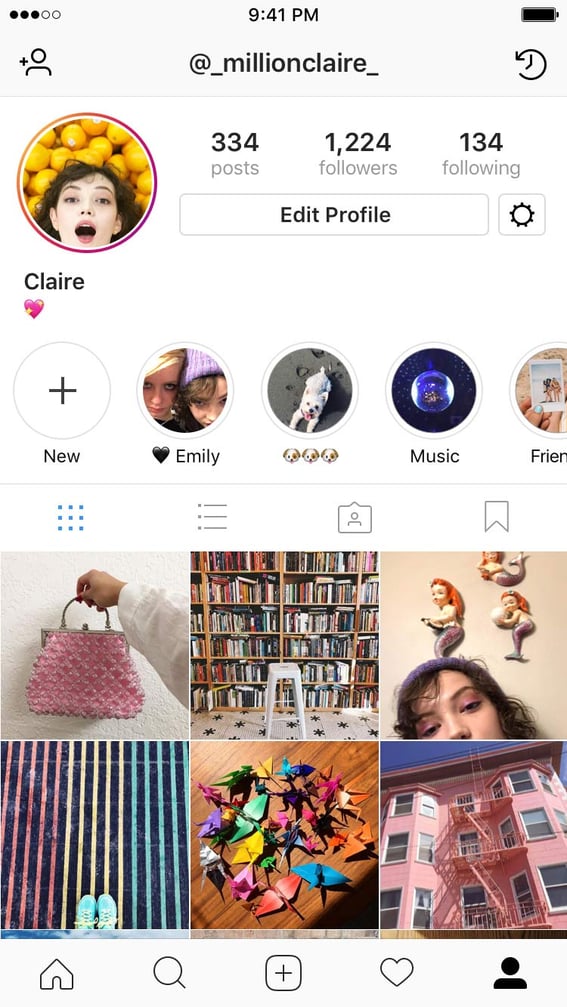
instagram stories highlights

On Instagram, consider adding Stories Highlights to your account. With Highlights, users can view Stories as long as the account owner makes them public. Marketers can use Stories Highlights to show off product features, answer FAQs, post shipping prices, or build their brand personality with jokes or community touchpoints.

To better visualize how Stories Highlights work, take a look at this example from The New York Times. They feature headlines for some of their most relevant stories directly on their profile.

When users click on the Highlight, they can read a condensed version of the article, essentially getting a free trial of the content they can access behind The New York Times's paywall.

On both platforms, take a look at your business's About section. This appears as text in the header of your profile. Consider using this space to list your:

  • Tagline
  • Active campaign slogan
  • Business hours
Tip #3: Create a content strategy

With your accounts optimized, it's time to develop a strategy. Do you want to promote an event? Build brand affinity? Announce a partnership, collaboration, or new product?

Identifying your goals can help you know what types of content to create for the most effective results. For example, telling a feel-good story about your business's anniversary might perform better on Facebook. Showing an influencer wearing your latest product, on the other hand, may be better suited for Instagram.

As you develop your content strategy, try prioritizing A/B testing on a platform. By testing, for example, how an image performs on Instagram with or without sound, you can start developing content based on the stronger performer.

Linktree allows users to add multiple external links to a customized landing page for simple navigation and increased engagement. Want users to shop on your website, check out a landing page, or send you a message? Add those links to your bio! 

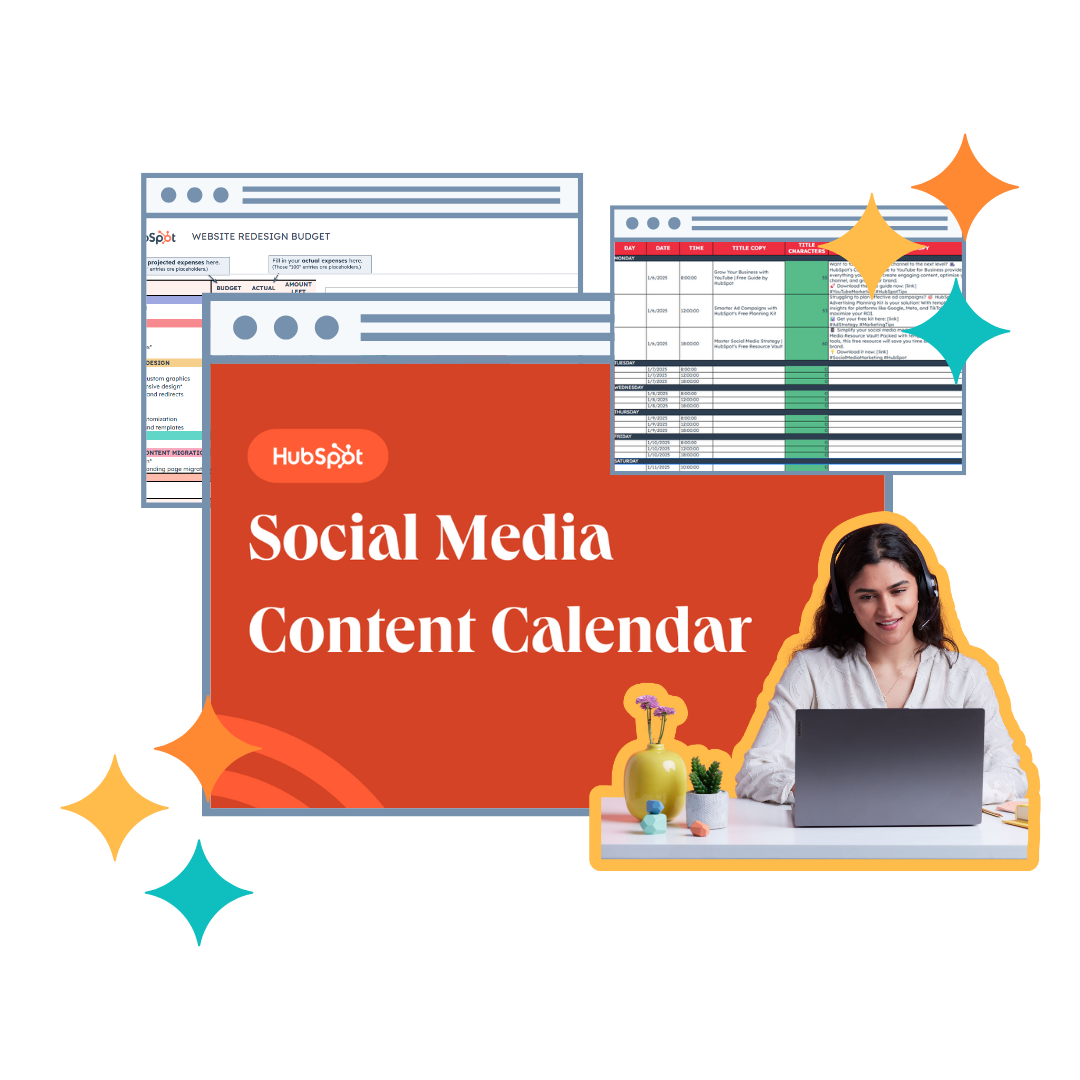
social media content calendar

Tip #4: Build a content calendar

Before you flood your feed with multiple posts in a day, take a step back and consider how posts will perform if they're spaced out. That's the primary goal of a content calendar, and it's a key tool for marketers at businesses of all sizes. With a content calendar, you can determine what posts go up, when they publish, and which platform they'll exist on.

As you develop your content calendar, keep these important milestones in mind:

  • Sales beginning and end dates
  • Business anniversaries
  • Major holidays
  • Campaign goalposts

Align these milestones with your post content to see key opportunities for new—or optimized—content.

AB testing

Free Resource: The Complete A/B Testing Kit

social media content calendar

Free Resource: Social Media Content Calendar Template

Tip #5: Stay active

Using your content calendar as a guide, keep a healthy posting cadence that you-or your team-can maintain. Include a mix of content types to engage a variety of users and demonstrate flexibility. Use Stories on Instagram to drive fear of missing out (FOMO) for users who want to see updates before they disappear—and use cross-posting features to highlight your Reels directly on Facebook.

Outside of your posting cadence, you can also stay active by replying to users who react to your content. Consider how you can reply to comments, monitor inboxes for customer service questions, and even highlight community responses to make your customers feel special.

Tip #6: Stay on brand

As you begin exploring how text posts, Facebook Lives, or Reels perform for your business, remember to prioritize a consistent brand voice and style across your social media platforms. For example, avoid using a distinct color palette for Facebook that contrasts your typical branding, and don't use songs with explicit lyrics in Reels if your business is family friendly. Rely on your business's style guide to help determine your creative content decisions-and, if you don't have a style guide, learn how you can create one with our free resource.

woman using social media tools

Tip #7: Lean into trends

Trends are integral to most social media platforms-but, with the rise of short-form video content, trends are more crucial to platform success than before. By jumping on trends with your organic content, you can position your business as modern and authentic. To find trends, visit Instagram's "Discover" tab and explore some popular video formats. Trending sounds and filters can help you game the algorithm and find your audience more easily.

Tip #8: Keep an open mind

As you build your organic style on Facebook and Instagram, take notice of your likes, shares, and comments. Be willing to adopt your strategy if a certain post format isn't garnering attention, and stay informed of best practices with free resources through Facebook, Instagram, and marketing partners like HubSpot.

Free Resource: How to Build A Consistent Brand

Expanding Your Reach: The Impact of Paid Advertising

Engagement That Pays Off

Now that you're prepared with a content calendar and trend-worthy posts to engage customers, it's time to think about your paid advertising strategy. On Facebook and Instagram, effective paid ads are crucial to expanding brand awareness. Scroll culture, bite-sized content, and steep competition make it difficult to hold a user's attention for more than a second at a time. In addition to those challenges, users don't always respond positively to advertisements without clear, relevant value to their needs.

But an intuitive approach to paid advertising can empower you to sidestep these problems, attract new, high-intent customers, and support your return on ad spend (ROAS).

"I believe in creating a high volume of organic content on our platform of choice to identify what resonates. Then amplify proven content through paid ads. This strategy ensures we're investing in concepts that have already demonstrated organic appeal before allocating budget to boost them moving forward. Very strong strategy to reach the people you want to reach."

Morgan Ingram

Founder and CEO of AMP

Seven tips for creating paid ads on Facebook and Instagram

"Success in creative paid campaigns comes from testing and trying multiple variations. It's never just one ad."

Jacqueline Snyder

The Product Boss

HubSpot logo

"Understanding if you want your campaign to either drive demand, such as conversions and sales, or reach as many people as possible to spread awareness, is a key distinction.

From there, it's then easier to move forward with selecting your channels, budget, and objectives. For a reach or traffic campaign, Meta will deliver your ad to as many people as possible without necessarily optimizing for an ad conversion or cost per acquisition (CPA). On the other hand, if you set your objective to leads, Meta will deliver your ad to a more primer audience that is likely to convert on your ad. One isn't necessarily better than the other, and we like to test both at HubSpot to incorporate into our full-funnel paid strategy."

Nicole Ondracek, Senior Marketing Manager, Paid Brand Media at HubSpot

Measuring Performance for a Growth Mindset

Turning Metrics into Marketing Tactics

Now that you're ready to begin creating organic and paid content on Facebook and Instagram, you'll need a strong measurement strategy in place. Measurement can help you understand when ads perform well, how you can adjust ad creative or messaging, and why swapping a visual element will drive higher engagement.

Measuring paid advertising performance is a no-brainer. You're trying to demonstrate ROAS, after all. But it's equally as important to measure organic performance as well. Those insights can help you understand what your customers want to see from your social media presence-and what adjustments you can make to encourage clicks, comments, and follows.

Let's take a look at the importance of measuring organic and paid content performance-and tips for getting the most out of your analytics tools.

"Paid strategies buy attention, but organic strategies earn it. Think of paid content as the spark and organic content as the lasting flame that keeps your audience engaged. Both are required for sustainable access of retained high-value attention by the right audiences."

Sarah Chen-Spellings

Host of Billion Dollar Moves

organic content

Measuring organic content performance

You can monitor a post's performance at any time using analytics on Facebook and Instagram.

On Instagram, you can check for:

  • Likes, comments, shares, and bookmarks
  • Reach, engagement, and post activity
  • Impressions-and what page they originated from
  • How many users engaged with your profile through the post

On Facebook, you can monitor post performance in the Meta Business Suite. The Suite will compile post insights into a user-friendly format and provide overview information about content on your account.

By keeping tabs on an individual post's performance-and your account's overall reach-you can understand how your approach is working, and how you can optimize for better results.

If you want deeper analytics on your organic content, you can consider integrating external software with your Instagram or Facebook account. CRM software solutions often plug into social media accounts, offering seamless monitoring capabilities that dive deeper into post performances. The added perks of CRM software, from tracking platform mentions and highlighting customer messages, pair well with most social media marketing strategies.

As you measure your organic content's performance, consider using software that helps you determine:

  • Where users encounter your content, such as their feed, their Discover page, or through suggested posts
  • When users follow your account, and what content encourages this action
  • What time of day users engage with your posts
  • How formats, trending sounds, and hashtags affect discoverability
a team collaborates in front of a laptop

Measuring paid advertising performance

Monitoring your paid ad's reach is vital to demonstrating ROAS-and you can access a number of analytics by using resources to your advantage.

Compiling these metrics and comparing them against each other is one of the most effective ways a marketer can determine their ROAS. For example, an ad with high CPC and low CTR may not generate a business's desired results, if their goal is awareness. On the other hand, if CPM is low and the business is aiming for brand awareness, CPC and CTR may not be as important.

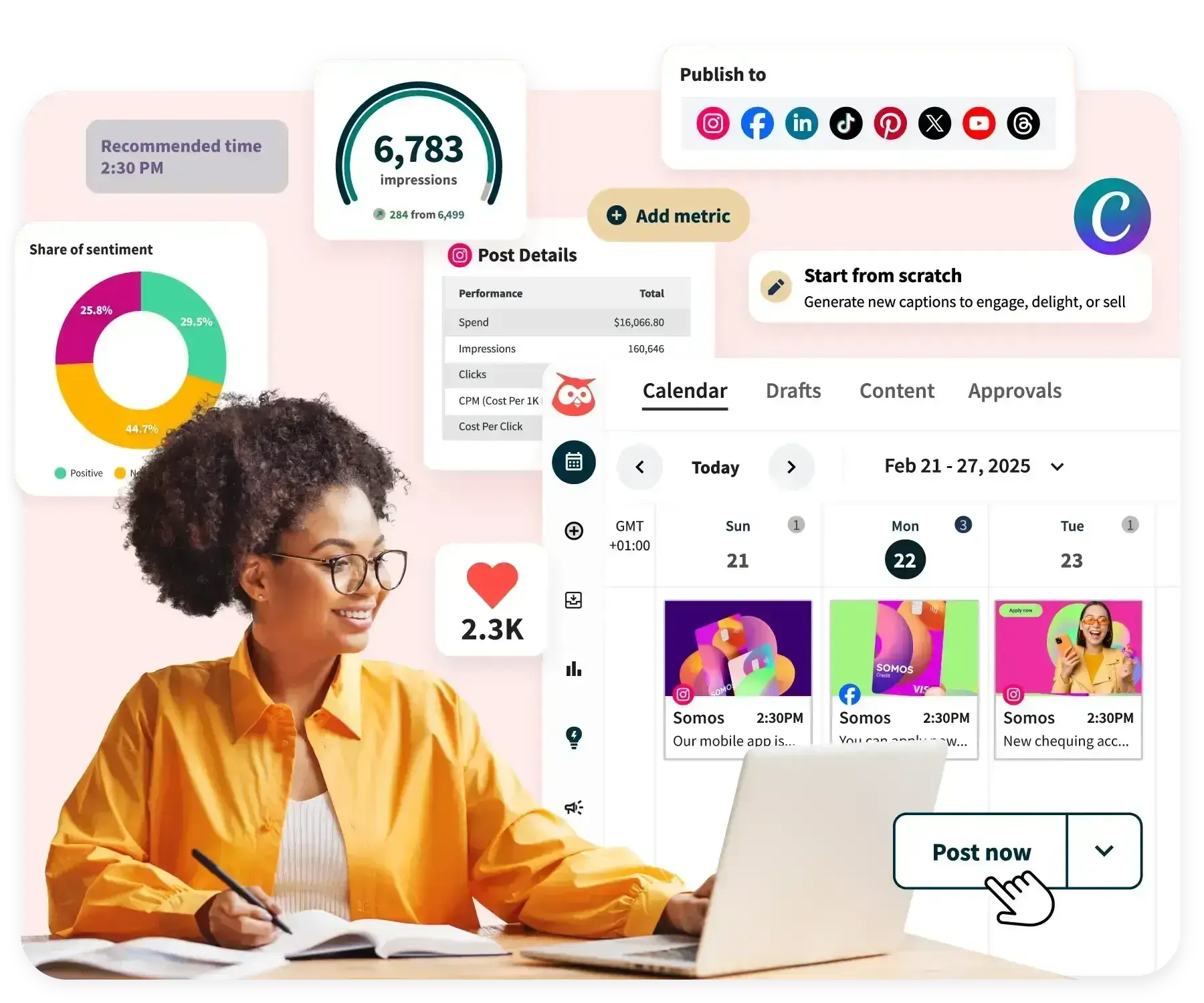
While it's a worthwhile task, analyzing the intersection of these KPIs can be time consuming—and it's easy to make a mistake. That's where monitoring software comes in. With effective social media monitoring software, you can account for a number of KPIs that show how a paid ad is performing in real time. 

All-in-One Social Media Management

CRM That Goes Beyond Meta

You're ready to activate a robust cadence of organic and paid content across Facebook and Instagram. You know that measurement is crucial to designing campaigns that get results. Now, it's time to put social media software to work-and HubSpot's Social Media Management is the right tool for the job.

Scroll for more

Scroll for more

Scroll for more

Scroll for more

Keep Learning with Free Resources from HubSpot

Strong customer relationships start with powerful marketing. That's why we offer 100% free resources for building a digital marketing strategy tailored to major social media platforms. Bookmark these guides, templates, and reports for quick access to handy strategies that empower marketers around the world.

marketers guide to tiktok-2

Marketer's Guide to TikTok

2026 Instagram Engagement Report

2026 Instagram Engagement Report

How to build your brand

How to Build Your Brand

Creative Brief templates

Creative Brief Templates

content calendar template

Social Media Content Calendar Template

ab testing kit-1

A/B Testing Kit

Not ready to commit?

No problem-you can schedule a free demo to see how Social Media Management can elevate your Meta marketing strategy!